
Blog Post
Reckoning
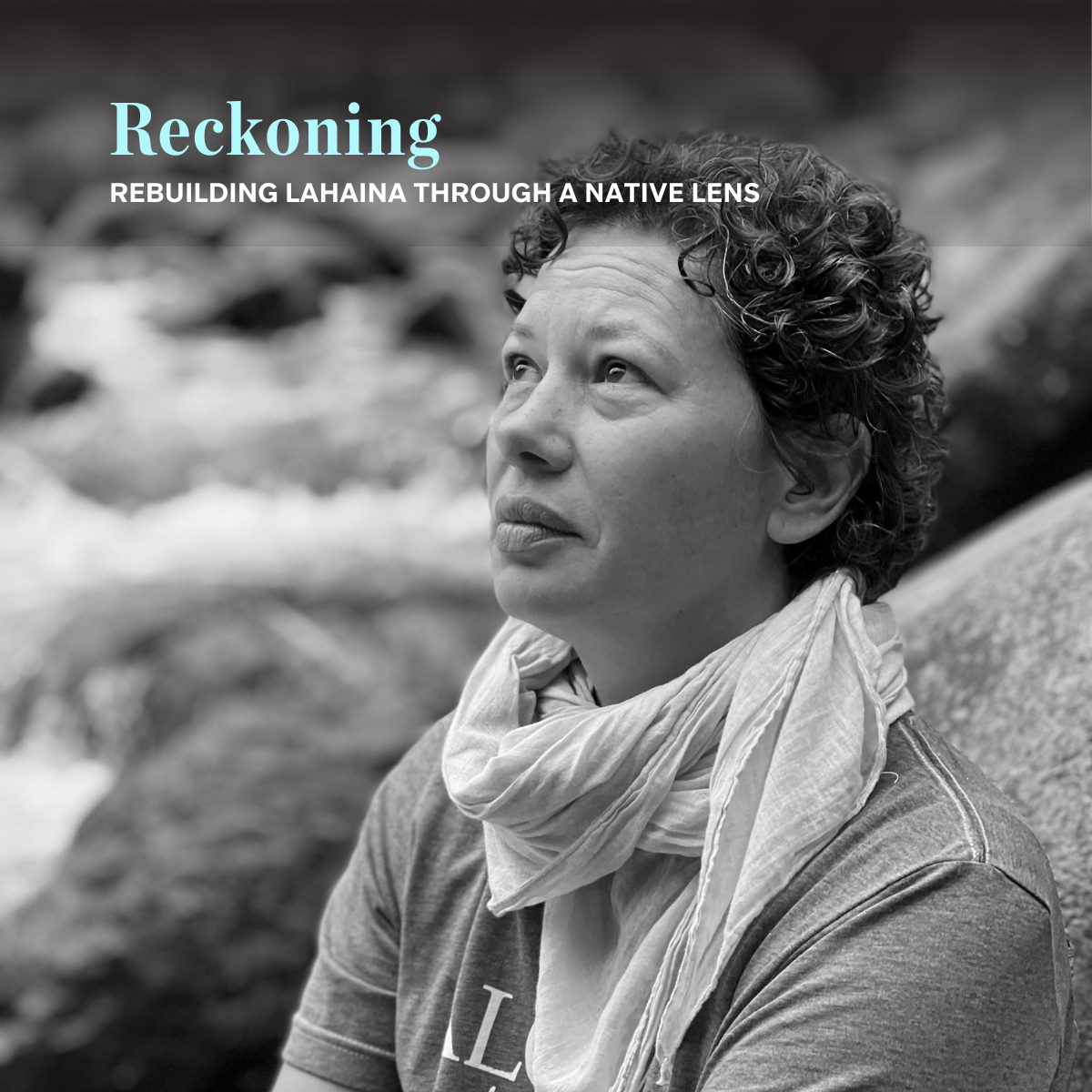
Three years after the deadly and destructive fires swept through Lahaina, the town’s recovery and rebuilding efforts remain in flux. Maui resident Noelani Ahia runs Maui Medic Healers Hui, which provides grassroots, community-driven services for the Hawaiian people. Ahia was one of many indigenous Hawaiians to provide healing and aid to the Lahaina community in the immediate aftermath of the fires, and she will continue to do so well into the future. Ahia sat down with BuildingGreen to discuss indigenous approaches to disaster, colonialism, climate change, community and rebuilding.
What is happening from a recovery standpoint in the indigenous community after the Lahaina fires?
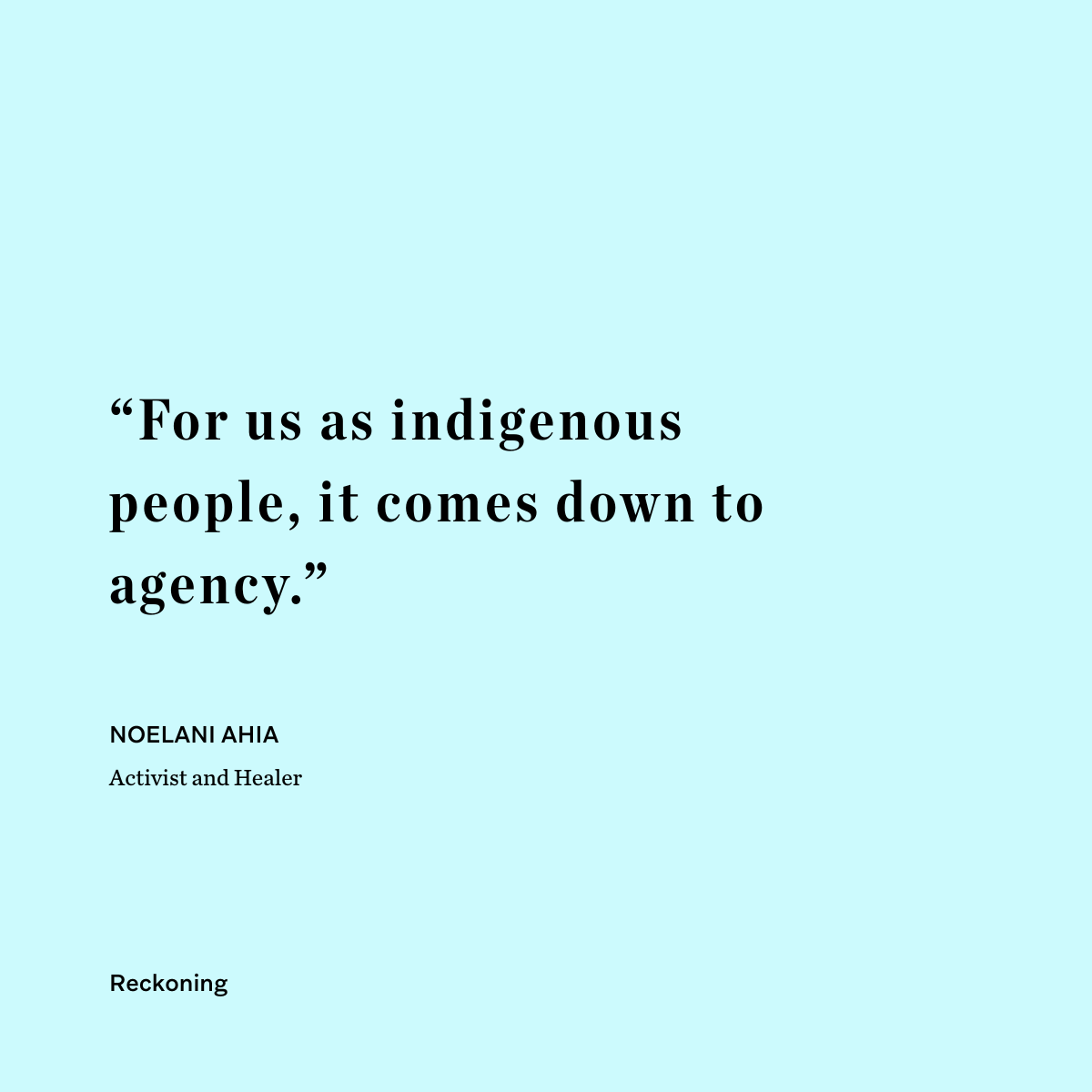
It’s moving so fast, but it’s also moving very slow in some respects. There are a lot of elements of recovery that you don’t think about until you’re in a community in recovery. Like who has decision-making power. For us, as indigenous people, it really comes down to consent. Are they going to wait for our consent or are they going to do what they always do and ram things down our throats? Because of the whole disaster capitalism mechanism that I didn’t even know existed until we were in the middle of a disaster, there’s a lot of money and influence that is positioned to control the decision makers. Since the overthrow, many of our elected officials for generations have been controlled by business interests, so for us as indigenous people, it comes down to our agency. Like how much agency are we going to have in this process?
We got through the cleanup part. It went in phases: There was the event and then there was shutting everything down and the recovery of human remains and then there was the reentry period, where people were allowed to go back in and collect their things. Our organization, Maui Medic Healers Hui, was part of that. We ran the medical and mental health part. We went up and down the streets on golf carts with everybody making sure they had the correct PPE and being a shoulder to cry on, providing cold packs and hydration—whatever we could do to help people through that process, because it’s so incredibly traumatizing. Then they went to the portion of the cleanup where everything was removed from the lots and taken to a temporary site, which was controversial because our ‘aina here is sacred and it’s dumping all this toxic waste in an area that’s close to one of the most important reefs in Hawaii. That was really difficult, but logistically there weren’t too many other places it could go. So there are a lot of things that the community had to think about and weigh the risks and benefits of.
SUPPORT INDEPENDENT SUSTAINABILITY REPORTING
BuildingGreen relies on our premium members, not on advertisers. Help make our work possible.
See membership options »They just finished with the commercial cleanup and now people are starting to get permits to rebuild. But the question is, are they going to rebuild the same? Or is it just the rich people now who have the capacity to rebuild who are putting their homes back up? What about all the renters? The majority of the people in Lahaina were renters and they may not be able to return. For us, because of this tourist economy, we have a ridiculous amount of vacation rentals and out-of-state owners who own the parcels and the houses and they’re going to rebuild, but is it going to be something that our local people can afford to rent? People have been in FEMA housing this whole time, and those FEMA leases just ended. Because of the disaster, all the prices went up, so for people who might have been paying around $2,000 for a two bedroom, now it might be more like $5,000. People don’t have that kind of money. These are local, working-class people who work three jobs already—often low-paying tourist jobs because that’s the economy that’s been forced on us, not by choice. So we have to talk about settler colonialism and the illegal overthrow and the fact that this is Hawaiian land, we don’t have control, and we’re not allowed to exercise our relationship to ‘aina because it’s illegally occupied by the U.S. government.
All these houses have burned down, but whose land is it really? We have a unique land use tenure that came from the Kingdom period, where families were able to claim land and have ownership over it and have an allodial title, which meant it belonged to them in perpetuity and it never reverted back to the crown. So there’s definitely a push for kanaka [native Hawaiian] to look for ways to get back on the land. One of the organizations that’s doing this now is the Lahaina Community Land Trust, set up the week after the fires by longtime community activists who grow food and who are deeply invested in this place. It’s evolving into something that can purchase some of the parcels from people who had to move away and have to sell or don’t want to be in Lahaina anymore, and then hold it in trust for multi-generational families. The more parcels we can put in the trust the better, because then the community has some agency over what happens to it. The biggest thing that we’re fighting is the imposed tourist economy. North of the burn zone, around 87 percent of the housing units were vacation rentals. Our unsheltered community is rising like crazy: kanaka maoli [indigenous Hawaiians] are 10 percent of the population of the “state” but we make up like almost 50 percent of the unsheltered community in our own homeland. On our own lands.
This is a huge question but what can be done as a community to reclaim ownership over indigenous land and rights?
That’s the million-dollar question. It’s one that we ask every day. Of course we need political power, even within the state, and even though a lot of folks resist going into that system because it’s not our system and it continues to oppress us. Having some leverage in the state is useful, but ultimately the U.S. gotta go. We need to deoccupy and really what that takes is education in the larger community, in America, in the international communities, to add pressure. Not that it’s going to happen like that. Nobody’s unrealistic, especially with the conditions in American government at this particular bizarre moment in time.
The natives on the continent should have their land back, and we can rebuild in a different way. We can rebuild around our values of being in relationship and reciprocity with the land and all of the elements and each other, and being in communities of care instead of extractive systems and capital systems that put money and power and greed above all else. Where people spend their dollars is critical. Whether it’s individuals or foundations, supporting indigenous efforts and organizations that are working on the ground to take care of indigenous people is important. It’s almost like reparations for Hawaii. People need to understand that moving here is problematic and every single person who moves here who’s not kanaka is taking up space from a kanaka. That’s not to say that nobody can come here; our people are very open and loving by nature, but we’ve been so exploited. If you’re going to come here you have to give more than you take, you have to ally with indigenous people, you have to take a step back and ask permission and find out where you can be of service instead of just coming here to extract and coming here for your paradise experience at the expense of people’s lives.
How do native Hawaiians talk about the return of the land?
Our guiding principle really is Aloha ‘aina. ‘Aina is land, but it’s that which feeds. ‘Ai is to eat, so ‘aina is that which feeds and Aloha ‘aina is a philosophy, but it’s also a political position, one that requires commitment to the restoration of pono, or righteousness, for our land and our people who are connected to it. There’s a saying, a hiki i ke Aloha ʻāina hope loa, and it means “until the last Aloha ‘aina,” like we don’t quit until there are none of us left. That was their goal: none of us left. Blood quantum comes in and in order to get land through Hawaiian Homes Land Lease you have to be 50 percent Hawaiian. The [colonizers] thought after 100 years there’d be no more 50 percent Hawaiians and they could just take the land back. It was the worst land anywhere, too, like you couldn’t build infrastructure, and there was no water. This is what they do in reservations too—it’s really not that different. There are like 30,000 or 40,000 people still on the wait list. Like my dad’s on it, he’s in his 80s and he’s still on a wait list. People die on the wait list.
“We can rebuild around our native values of being in relationship and reciprocity with the land and all of the elements and each other.”
So Aloha ‘aina is the guiding principle. For return of the land, we would say hoʻi hoʻi kʻaina ā hoʻi hoʻi, to return and restore the land; to bring back. Hawaiians are very connected to a sense of place. Our chain of islands is Kō Hawaiʻi Pae ʻĀina, each island is a mokupuni, within each island there are land divisions called moku, and then within each moku there are land divisions called ahupua’a. Ahupua’a especially are super important because it was a land division that was based on resource management and making sure everyone in the ahupua’a was provided for. The farmer gives to the fisherman and the fisherman gives to the farmer, and regardless of where you were placed you had access to different parts of the ahupua’a to gather for medicine, ceremony, food, materials, building and indigenous industry. It’s a model that we’re trying to get back to.
There are particularly special places in Lahaina, one of those being Mokuʻula and Mokuhinia, which is one of the most sacred places in Hawaii. There’s some controversy over whether to restore it to how it was in the 1500s, or in the 1800s. In the 1800s it was a cede of the Kingdom of Hawaii, and in the 1500s it was the cede of government for an Ali’i [nobility or chief] named Piʻilani who brought peace and abundance to the island during his tenure, and he had a daughter named Kiha Wahine [Kiha-a-Piʻilani]. When she passed away, she was deified and transmuted transformed into a mo‘o, which is a lizard deity, and her spirit still governs not only Lahaina but she travels—she gets around. That’s the genealogy that I come from. From a spiritual perspective, a lot of us who are descendants and connected to that genealogy are watching the signs. The fire itself was a sign. I’m not going to interpret what I think it means but there are so many shifts going on in the world right now. We’re trying to return to our indigenous practices of kilo, to track the signs and really listen for what our akua, which are our deities—oftentimes elements, things that give life, like Kiha Wahine—to see what she wants and how she is going to guide us toward the “rebuild,” because maybe the rebuild is no build.
One of the best times in my life in Hawaii was during the lockdown, when all the planes stopped coming and our reef started to restore the limu, our seaweed, our native birds started showing up in places we don’t see them normally. It was this amazing ecological restoration and cultural restoration for us, because we could access places that we don’t go to because they’re full of tourists. They’re sacred places, but it’s so uncomfortable to be there under the tourist gaze.
You have run for city council and are involved in local government. Why is it integral to effect change on a local level, and why is appropriate representation in local government important?
We need political analysis to understand the systems that are causing the harm, including the fire. It wasn’t a random event. Technically they call it an accident, but there were conditions in place that are directly linked to settler colonialism from the tourist industry and the development industry that led to the conditions, like taking away the wetlands and concretizing Lahaina. From mauka to makai, from the top of the mountain to the ocean, is out of balance.
There’s not enough representation in the building industry. It can be really challenging to even get a seat at the table. I think about this often, and even before the fire. Our ancestors lived in quote unquote “grass shacks,” which is sort of used in a derogatory way, but the industry of our people, and most of all indigenous people really, was to make use of the environment in the best possible way, to live in harmony and in reciprocity. No, we didn’t have these concrete houses that could withstand 60-mile-an-hour winds, but when they blew down, we could just rebuild them. I’m not trying to be utopian or simplistic, but there’s something to be said for working with the environment and considering how our indigenous industry can inform where we put buildings and how we put buildings, while using easily renewable materials and not concretizing the land underneath it.
This is not the last natural disaster we’re going to have. The writing is on the wall, whether it’s in Lahaina or other places in Hawaii: fires, floods, earthquakes, tsunamis. We need to be building with the idea of adaptability and flexibility and being able to pivot whenever we need to. I know that we’re conditioned to be tied down, but you could be connected to the ‘aina without having to have this giant structure that’s like a fortress. I feel like simplification is going to be our friend: not needing to spend gazillions of dollars, and not shipping in materials and bearing those costs. Things could get blown over again in five years—not that I’m trying to call that in or predict that—but we’ve just seen this too many times. If we have to build again, we have to build again, and we need to be prepared for that instead of trying to be prepared to build it back like it was.
Published October 11, 2026 Permalink Citation
editors, t. (2026, October 11). Reckoning. Retrieved from https://www.buildinggreen.com/blog/reckoning



Add new comment
To post a comment, you need to register for a BuildingGreen Basic membership (free) or login to your existing profile.