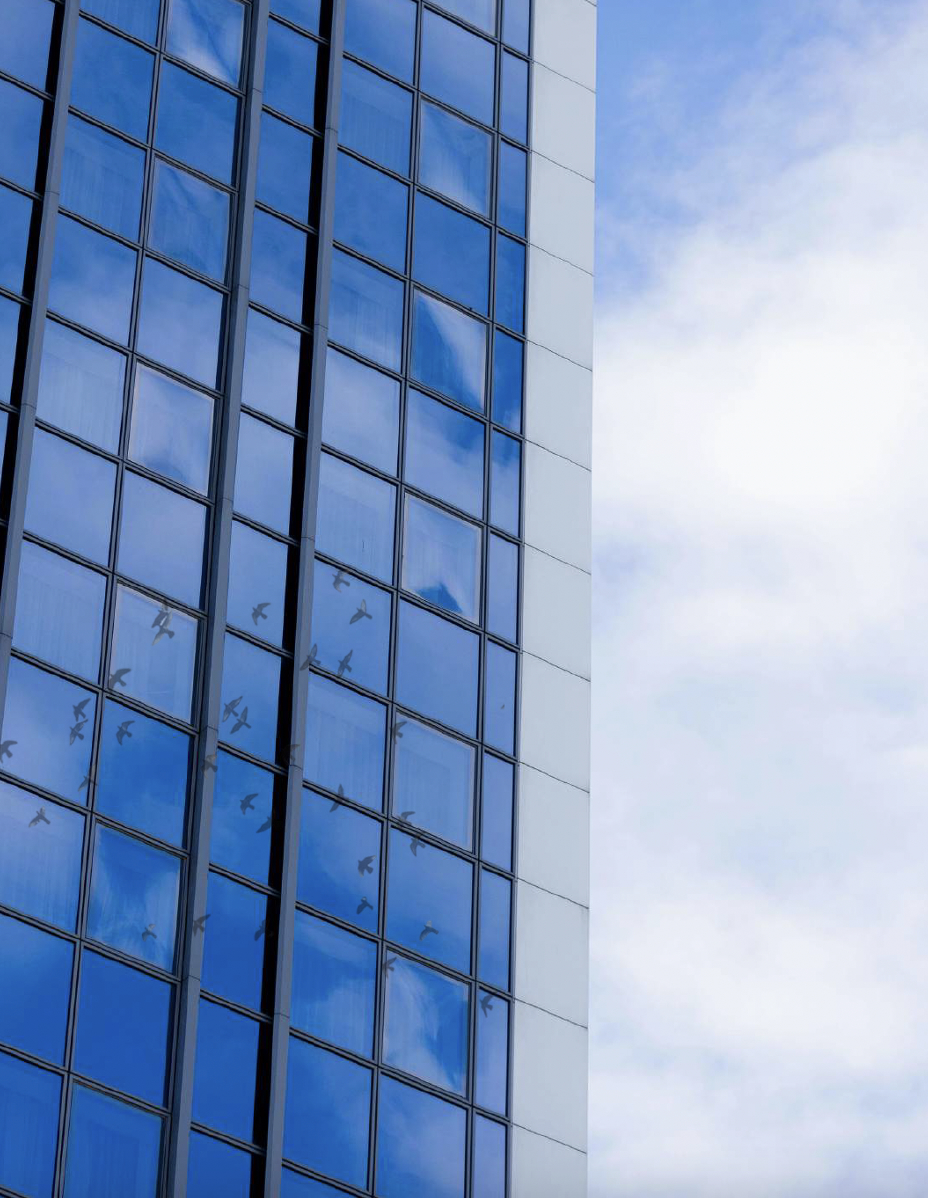
A 2014 review of 23 studies estimated that between 365 million and 988 million birds are killed every year in building collisions in the U.S. alone. A 2024 study found that since many strikes don’t kill immediately, but injured birds later succumb to injuries, that number is conservatively northward of 1.28 billion.
Save the Birds was published in BuildingGreen Issue 2: Deep Ecology. Take the quiz to earn 1 AIA LU/HSW.
The hazard that the built environment poses to bird life has been known for decades, but the full magnitude has now come into view. A 2014 review of 23 studies estimated that between 365 million and 988 million birds are killed every year in building collisions in the U.S. alone. A 2024 study found that since many strikes don’t kill immediately, but injured birds later succumb to injuries, that number is conservatively northward of 1.28 billion. It’s also important to note that all types of buildings, including single-family residences, are responsible for these deaths, not just high-rises.
These preventable casualties come at a time when the world’s biodiversity is shrinking as a result of human development, compounded by climate change. Bird populations across the U.S. are suffering widespread declines, and one-third of all U.S. bird species are of high or moderate conservation concern, according to the National Audubon Society’s 2025 U.S. State of the Birds report. “We can’t afford to have this kind of unrelenting attrition due to bird strikes—we’re indiscriminately killing the very strongest as well as the weakest members of the population,” says Daniel Klem, Jr., professor of ornithology and conservation biology at Muhlenberg College. Klem is a leading researcher on bird collisions and author of Solid Air: Saving Billions of Birds from Windows (Hancock House, 2021).
Ironically, architects’ efforts to bring people closer to nature has imperiled nature. “Green roofs and landscapes are widely embraced as strategies to enhance human comfort, but these are the very things that will attract birds to the building,” says Urvi Pawar, a building performance analyst at CannonDesign. Pawar notes that because operations staff who deal with bird collisions rarely collaborate with designers, the building industry remains largely unaware of the scale and seriousness of the problem.
However, avian advocacy efforts are increasing awareness and impacting public policy. Bird-sensitive design is an area where North America has taken the lead, but advocates expect to see a number of European cities to follow suit in the near future. Currently, nearly 30 places in the U.S., including New York City, San Francisco and Washington D.C., mandate some level of bird-friendly design in their building codes.
In Canada, Toronto and other cities in Ontario have mandatory requirements. It has also been deemed illegal to cause bird deaths through glass collisions, based on laws protecting endangered species and migratory birds. “Since building owners may be held accountable, it’s in the best interests of architects to design bird-friendly buildings,” says Michael Mesure, executive director of FLAP Canada, an organization devoted to preventing bird–building collisions.
Even without a government mandate, building owners and facilities managers may be interested in bird deterrence. Personal experience dealing with bird strikes has turned many people into advocates. In many cases, though, the onus is on the design team to raise the issue and educate the client about how to prevent harm to birds.
This guide details the problem, strategies and products for reconciling design for people and design for birds. Note that this guide uses the term “bird-friendly” in lieu of “bird-safe,” following the lead of the American Bird Conservancy (ABC). “We try to be fairly pragmatic—we consider something ‘bird-friendly’ if we expect it will reduce collisions by at least 50 percent,” says Kaitlyn Parkins, the glass collisions program coordinator at ABC. “We don’t want to people to have the expectation that every single one of these products is ‘bird-safe’ and is never going to cause a collision or harm to a bird.”
Blinded by the Light
Birds have been colliding with manmade structures, often to their great detriment, for the last couple of centuries. The earliest accounts of bird strikes were at lighthouses, and at least one tall-masted steamship. They were significant enough to warrant the first U.S. survey in 1880. The survey noted that most of the reported bird strikes happened in bad weather during migration season, and concluded that that deaths must “must amount to many thousands annually.”
In one of the reports, naturalist Spencer Fullerton Baird wrote: “On the night of October 17, 1876, I was on the top of the Cape Hatteras light-house. It was a very dark night, and ‘misting.’ The wind was blowing thirty-five miles an hour from the northwest. As soon as it was fairly dark, I could see thousands of small birds flying around the leeward of the tower….As soon as the light would fall upon then, they would fly from it and come in contact with the lantern with such force that they were instantly killed….I went out and gathered from the balcony of the watch-room and lantern three hundred and fifty dead birds, besides one hundred and forty that were picked up the next morning off the ground at the foot of the tower.”
The mass casualty event that Professor Baird witnessed in 1876 would become increasingly common as electrification began replacing oil-fueled lamps in the late 1800s. The growing metropolises erected “light towers” to illuminate large areas, along with lights atop skyscrapers and other tall structures, which resulted in large numbers of bird deaths. The Statue of Liberty, with its “fatal beacon,” notably killed 1,400 birds in one night in 1887, and a fogbank in the fall of 1948 resulted in mass casualties at skyscrapers along a large swath of the eastern seaboard.
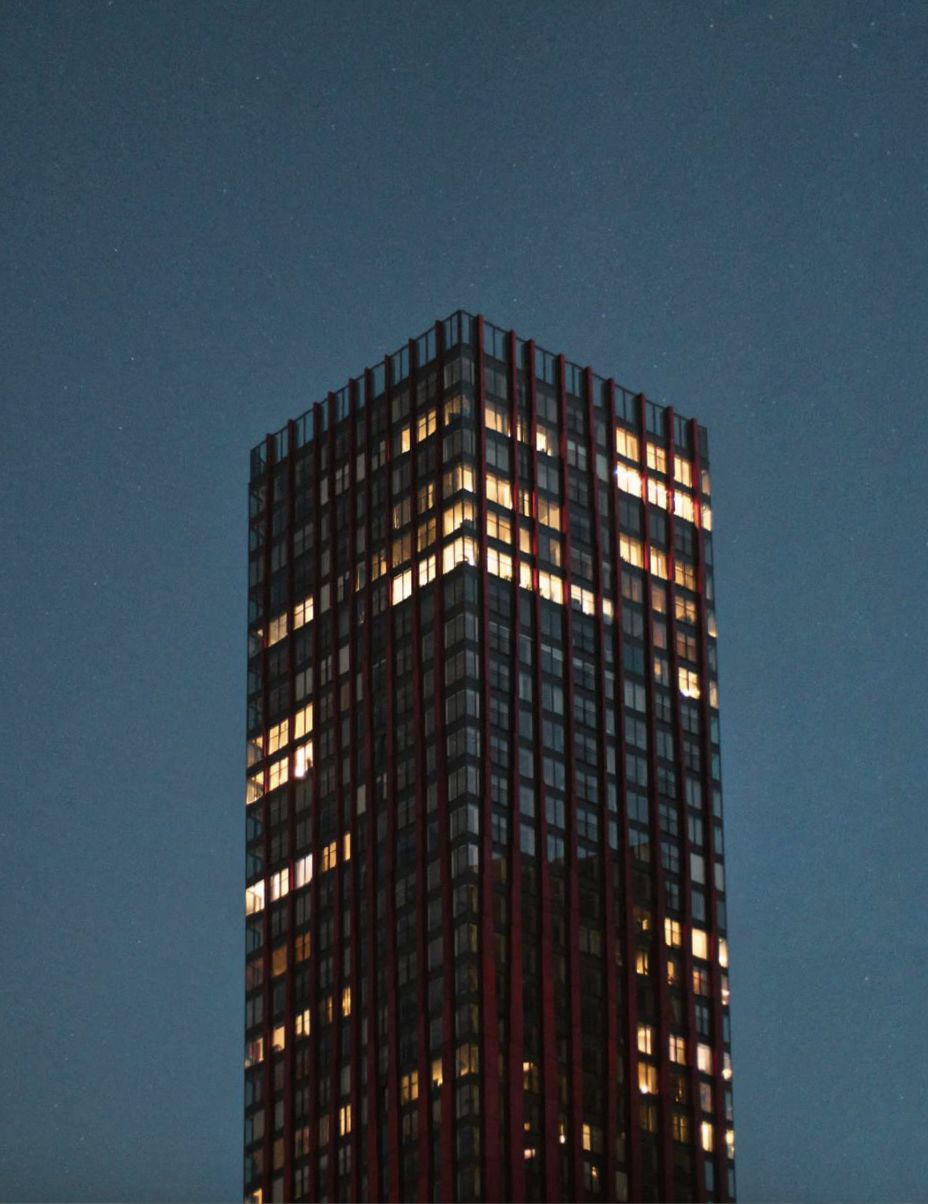
These attention-grabbing deaths, which were documented in the local press, make sense in light of what we know about birds. Most bird species settle down for the night, except during their twice-yearly migration, when they travel in the dark at high altitudes. Seventy percent of birds in North America migrate. To navigate, they use the earth’s magnetic field, as well as the moon and stars. During migration season, inclement weather will force birds down to lower altitudes, where they gravitate toward bright lights. Scientists believe that artificial light both attracts and confuses them. “Birds become disoriented and entrapped while circling in the illuminated zone and are likely to succumb to exhaustion, predation, or lethal collision,” per the NYC Bird Alliance.
In reaction to public awareness, skyscraper owners began turning off their lights when birds were migrating. Lights Out, a program supported by the National Audubon Society, encourages building owners to turn off or dim lights during the spring and fall migration, particularly during the peak migration period. Dates for peak migration in specific cities can be found at birdcast.info.
Both the National Audubon Society and ABC also collaborate with the nonprofit DarkSky to reduce nighttime lighting in general. Beyond its impacts on birds, light pollution has deleterious effects on nocturnal ecology in general as well as human health, increasing the risk of sleep disorders, heart disease, cancer and other serious ailments. According to DarkSky estimates, 30 percent of all outdoor lighting is wasted, mostly due to unshielded lights, costing $3.3 billion and generating 21 million tons of carbon per year.
DarkSky has five guidelines for responsible outdoor lighting, which call for eliminating unnecessary lighting, reducing light spill by targeting and shielding lighting, minimizing brightness, putting lights on timers and motion sensors, and emphasizing warmer light (vs. blue wavelengths). The organization recently issued a streamlined model ordinance to help jurisdictions establish outdoor lighting policies.
Most bird species settle down for the night, except during their twice-yearly migration, when they travel in the dark at high altitudes, using the earth’s magnetic field, as well as the moon and stars. During migration season, birds gravitate toward bright lights.
Transparently Dangerous
The problem of nighttime lighting, however, is secondary to a much greater issue: the increasing amount of glass on buildings. Turning the lights off helps, but doesn’t address the main problem.
During the Industrial Revolution, beginning in the mid 19th century, techniques for mass-producing plate glass made windows increasingly accessible for everyday buildings. In 1918, architect Willis Polk designed one of the first glass curtain walls for the Hallidie Building in San Francisco. Starting in the 1970s, early citizen-scientists began recording the routine occurrence of dead and dying birds around skyscrapers. In 1993, bird deaths at the TD Centre, a complex of several skyscrapers in downtown Toronto, led to the founding of FLAP Canada, the first organization to address bird-building collisions. In the United States, the earliest efforts to gather data on bird casualties include the NYC Bird Alliance’s Project Safe Flight, which began in 1997, and Chicago Bird Collision Monitors, founded in 2003.
Although these deaths peaked during migration season, they were occurring year-round. And most bird strikes were happening in the early morning and daylight hours, when nighttime lighting was off. “We used to think, ‘Oh, it’s a simple solution,’ ” says Christine Sheppard, senior director of the glass collisions program at ABC. “But you can’t stop collisions only by turning out lights. It’s not a panacea.”
In the late 1970s, Klem also conducted landmark experiments that demonstrated how sheet glass and plastic were invisible to birds. “From a conservation standpoint, it wasn’t the dramatic kills that were occurring at the Empire State Building or McCormick Place or anywhere else that were significant—it was the unrelenting illusion of glass in all kinds of buildings that was killing birds,” says Klem.
While skyscrapers are the most high-profile culprits, most bird deaths occur at much more common buildings, from one to 11 stories tall, including typical suburban homes and apartments. The 2014 review calculated that less than one percent of bird strikes occur at high rises. It found that 56 percent of bird deaths occur at low-rise buildings between four and 11 stories high, and 44 percent at homes that are one to three stories high.
Even though bird vision is known to be quite acute, birds do not see glass. “The limitations of their anatomy and physiology does not permit them to see glass as a barrier,” notes Klem. Transparency is a problem, but more commonly, it’s the reflectivity of glass that deceives birds. Even perfectly clear glass will act like a mirror during the day.
In short, building owners and designers should assume that all clear and reflective glass, including spandrel glass, poses a threat to birds. The basic solution is patterned glass—sometimes generically referred to as “bird frit,” which allows birds to identify it as a barrier and still preserves access to light and views for building occupants.
Most bird strikes happen in the morning, after birds wake up and begin looking for sustenance. Collisions most often occur between ground level and the height of the tallest trees nearby, or the first four stories of a building. Birds are presumably seeking shelter or sources of food and water that they see mirrored by glass or through glass. Birds also become confused by buildings or passageways that are reflected or revealed.
Certain building elements are known areas of concern. Landscaped areas, including terraces, green roofs and atria, attract birds, so glass facades adjoining them should get special attention. “Flythrough” areas, referring to elements like glazed corners and parallel sections of glass—such as those on a glass bridge, for example—pose particular hazards. Glass railings, as well as any glass-enclosed outbuildings, should be addressed.
Advocates note that design guidelines have evolved quite a bit from the early days. “The scientific knowledge in this space has really advanced over the last few years, but there are still lingering myths and now-debunked science swirling around in the zeitgeist,” says ornithologist Heidi Trudell, the bird-friendly specialist and regional technical advisor at Guardian Glass. “For instance, old guidelines recommend things like opaque glass, but if it creates reflections, birds will hit even polished granite. And awnings can actually increase the intensity of reflections.”
Legal Eagles
In recent years, social media has magnified awareness of bird strikes, buoying longstanding education and advocacy efforts. A growing number of jurisdictions now require new buildings to be bird-friendly. In 2018, ABC, the second largest bird advocacy organization in the U.S., released a model ordinance to guide public policy. It calls for building facades to have 100 percent bird-friendly materials up to 100 feet of the building above grade. Among the nearly 30 jurisdictions that have adopted this ordinance in some form, New York City and Washington D.C. have the strictest versions. Washington D.C. requires bird-friendly facades up to 100 feet; New York City requires bird-friendly facades up to 75 feet. A handful of states have passed requirements for state-owned buildings, and a bill for federal buildings was originally proposed in 2017, but has not yet made it into law.
LEED, an internationally recognized certification program for sustainable building, can also help to steer new buildings in a safer direction. Originally introduced as a pilot credit back in 2011, bird deterrence measures have now been folded into the permanent (but still optional) part of the LEED rating system. In LEED v5, projects can receive one point for bird-friendly facades, and another for reducing light pollution. The updated credit for facades is more stringent, but also more straightforward. Previously, facades could have a certain percentage of non-bird-friendly glass, which meant that designers had to do calculations to try to meet that formula. The new credit simply requires that all glass up to 50 feet meets bird-safety standards. Additionally, if a building has a green roof, glass up to 20 feet above the roof grade must be bird-friendly.
“Anecdotally, bird-collision deterrence has been one of the most popular innovation credits,” says Douglas Smith, director of location and land use at USGBC. “The simplified credit in LEED v5 helps to make it more achievable without sacrificing quality, and we hope to see an increase in its uptake as a result.”
Planet-Friendly Design
Practically speaking, it can be difficult to reconcile bird-friendly design with aesthetic concerns, client requirements and budget limitations. “One challenge that designers often face is the perception that bird-safe requirements conflict with goals for daylight, quality views and aesthetic appeal,” writes Pawar at CannonDesign. “These aspirations typically lead to buildings with highly glazed facades….While fritted glass is a readily available and cost-effective solution, its visual prominence sometimes clashes with the project’s architectural vision.”
In 2015, architects at FXCollaborative replaced the dark-tinted, highly reflective glass at Javits Convention Center in Manhattan with a combination of stainless-steel panels and low-reflective glass patterned with white dots. Bird collisions decreased at the center by 90 percent.
However, fritted glass is commonly used to reduce energy consumption, and there are other good reasons to deploy it. “There are lots of reasons you might use frit,” notes Dan Piselli, principal and director of sustainability at FXCollaborative, a pioneering firm in bird-friendly design. “Besides lowering the solar heat gain coefficient, you might want to give the occupants more privacy, reduce glare, make a building less reflective or have other aesthetic reasons.” In particular, glare off buildings has caused some high-profile mishaps and can affect passersby and occupants of surrounding buildings.
Among the most eloquent examples of how bird-friendly design benefits everyone is the 2015 renovation of the Javits Convention Center in Manhattan, notorious for causing some of the greatest numbers of bird deaths in the city. After the architects at FXCollaborative replaced the center’s dark-tinted, highly reflective glass with a combination of stainless-steel panels and low-reflective glass patterned with white dots, bird collisions decreased by 90 percent. The facade changes, along with nearly seven acres of bird-welcoming green roof, reduced the building’s energy consumption by 26 percent. The vast convention hall also benefits from having more natural light that comes through the fritted glass, which is clearer than the original tinted glass.
“The way I like to frame the issue is not on its own terms as a standalone topic, but under the umbrella of general human impact on the environment,” says Piselli. “In general, everything that architects and sustainability experts want to do to mitigate the climate crisis and regenerate the environment is bird-friendly.”
And Pawar sees fritted glass as under an umbrella of design options. “Fritted glass is commonly seen as the default solution for bird-friendly design, but the strategy needs rethinking,” she says. “By extensively glazing a building, we create a problem up front and then try to fix it with frit, rather than addressing the issue through smarter design choices.”
Assessing Risk
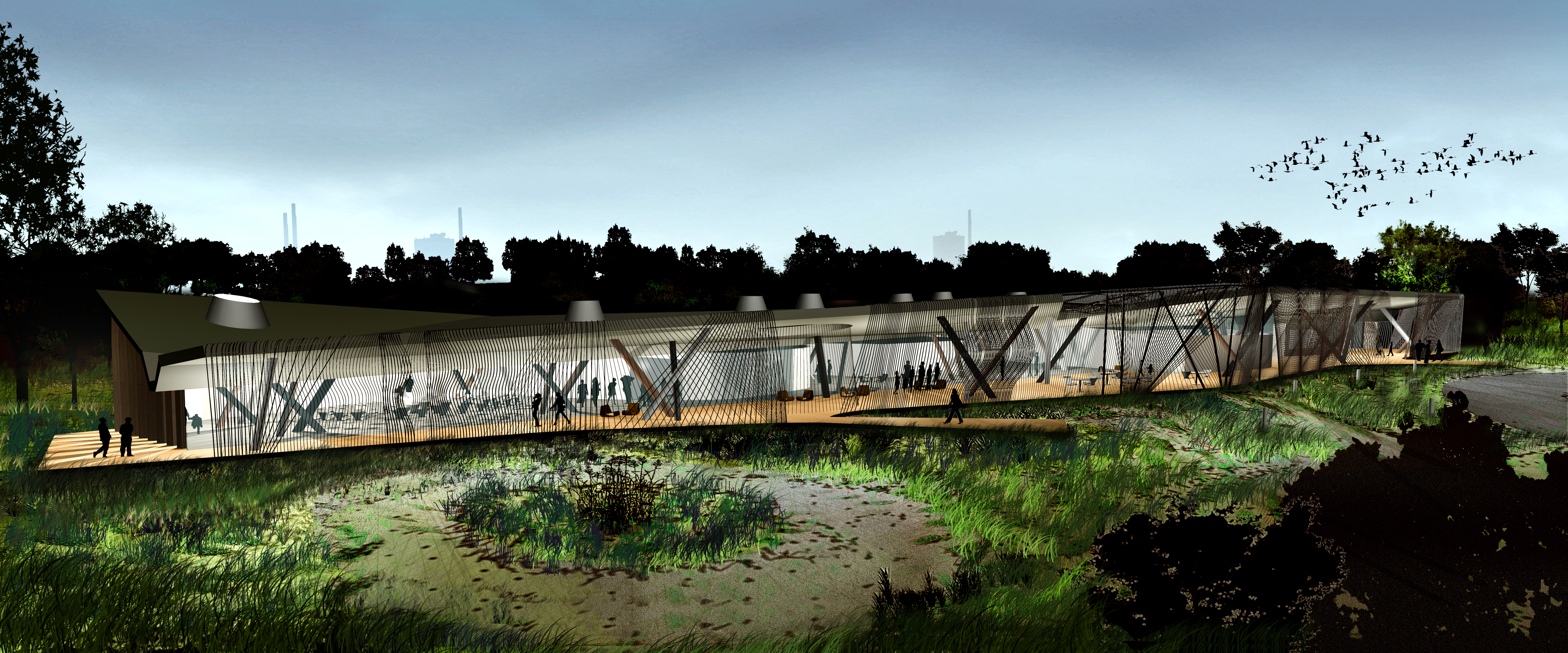
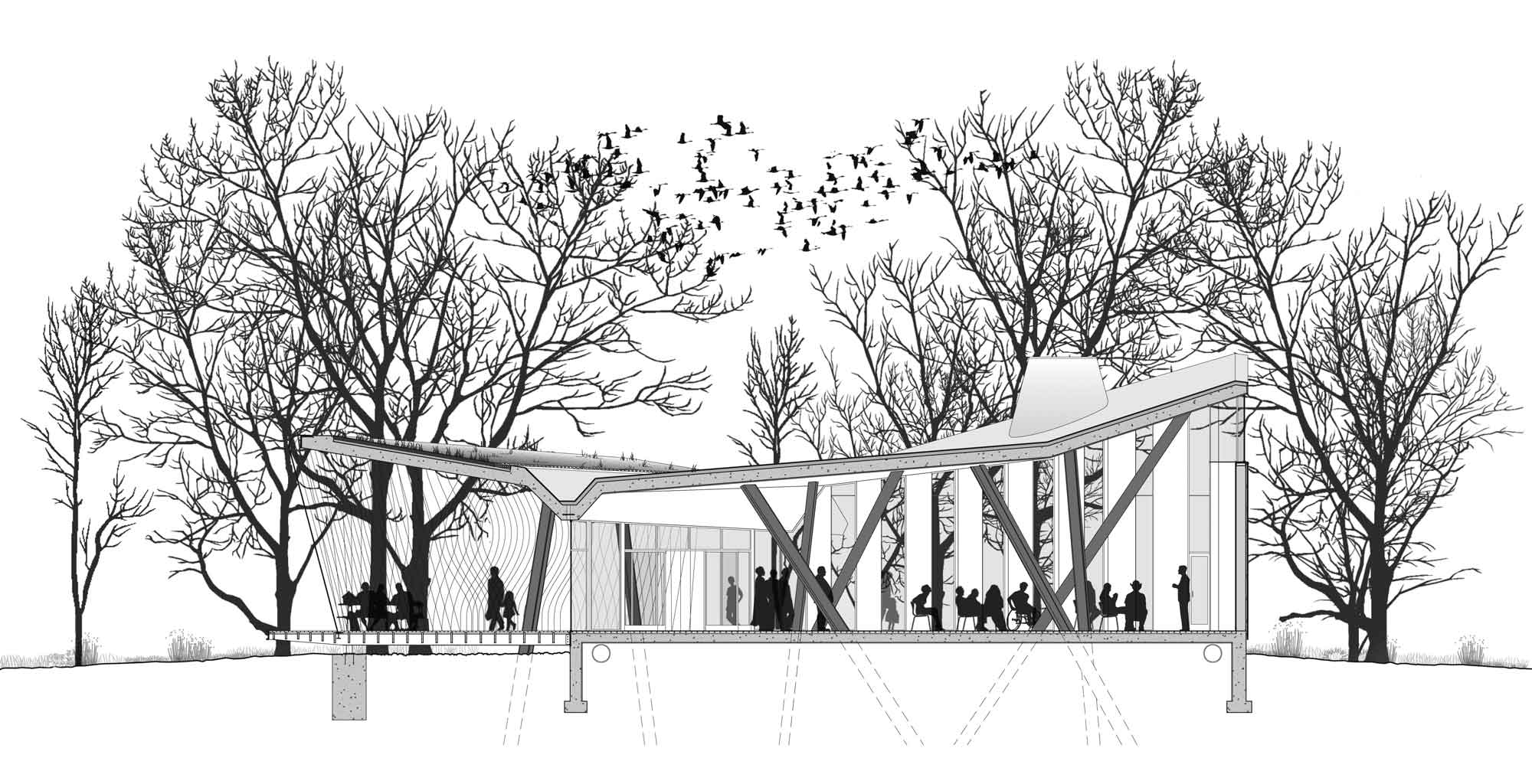
One building on the boards for the city of Chicago is the Ford Calumet Environmental Center, designed by Studio Gang. The center borrows from the very building blocks of bird’s nests for its glazed south elevation, creating a safety screen, while cladding much of its north elevation in wood, safer for flying birds and more comfortable for human temperature regulation.
For a building in the plans, as well as an existing building, it is possible to determine which of its facades are more perilous for birds. A building’s facade might be fine-tuned with materials with different threat factors tailored to the risk on different sides. Or a retrofit that is happening in stages will need to prioritize which sides to tackle first.
To determine relative risk, there are three key considerations, according to Mesure of FLAP Canada. First, does natural habitat exist within three miles of the site? Secondly, are there any significant plantings within 300 feet of the building? Lastly, how dangerous is the facade of the building itself? “The greater the abundance of vegetation, the greater concentration of birds you’ll have and the greater chance there is of collision,” he says, noting that the absence of vegetation does not mean that there will be no collisions. Mesure also points out that North America is covered by overlapping bird flyways, and that any area will have migratory birds passing through as well as local bird inhabitants. “Trying to define the problem based on flyway proximity or limit it to certain bird species is not a good idea,” he says.
Realizing the need for this type of analysis, FLAP Canada provides a free self-assessment tool called BirdSafe DIY Building Risk Assessment. Designed to be used by anyone, including homeowners, the online application prompts users to upload photos or renderings of their building. It also asks questions about the surrounding landscape, the reflectivity of the facade and nighttime lighting. To generate its reports, the application also draws upon other data sources, using Google Earth to determine the abundance of vegetation and water features nearby, and the Global Bird Collision Mapper to find out how many bird collisions have been reported. FLAP Canada also provides a fee-based consulting service, which produces a more comprehensive report and can be useful for clients who would like an independent third-party assessment.
Product manufacturers can also advise customers and help determine what product options are most appropriate for their project. For instance, Guardian Glass, which has an ornithologist on staff, will review building plans and offer suggestions.
ABC also emphasizes how important it is to take reflections into consideration. In “About the ABC Rating System,” the authors note that “because reflections on glass are both site and product specific, reflections should be considered early in the design process. Recommended design phase analysis ideally involves samples of glass viewed on the project site from a variety of angles, at different times of day and with all potential site-specific reflections taken into consideration.”
Seeing the Problem
There are a wide variety of ways to make glass more visible, from simple DIY methods like hand-painted patterns and screens of hanging cords, to high-tech glass with UV patterns that are hardly visible to the human eye. The basic rule for bird-friendly glass is that it needs to have a 2-by-2-inch pattern, allowing even the smallest birds, including hummingbirds, to see it. This guideline, based on research by Dr. Klem, has been adopted by ABC, which has become the de facto arbiter of a material’s bird-friendliness.
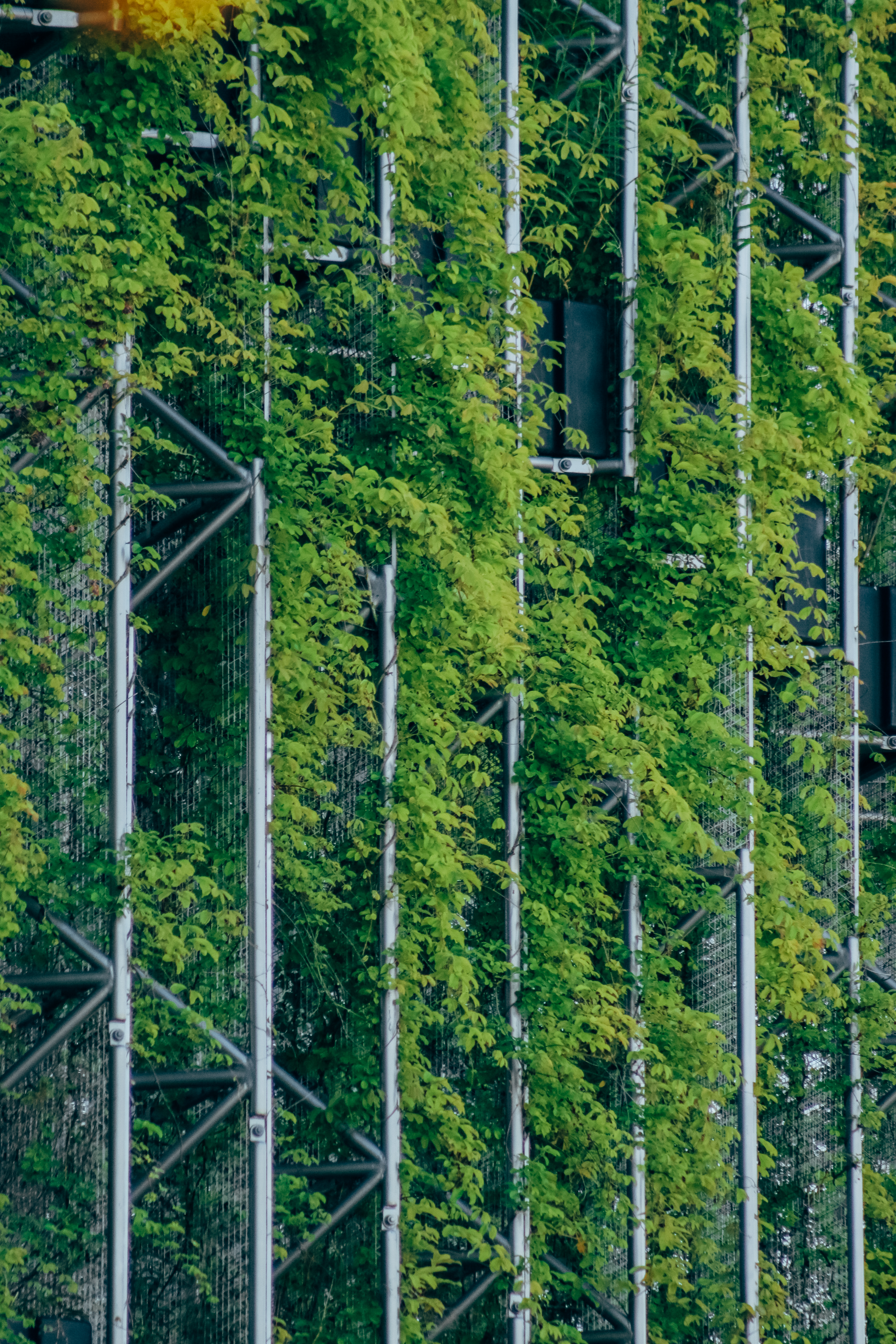
The University of British Columbia Vancouver campus Centre for Interactive Research for Sustainability has a green wall screen that deters birds away from the facade, while helping to control indoor temperatures. Photo by Philip Bertogg.
Prompted by LEED’s need for metrics, ABC began developing a system to test the relative safety of different materials in 2010. What was defined as a material’s “threat factor rating” became critical, since a certain number is necessary for buildings to comply with many bird-friendly ordinances. For example, the NYC ordinance requires new buildings to be clad with materials with a threat factor of 25 or less.
Only materials that have a threat factor of 30 or less are included in the ABC database. The more than 200 entries have either been tested by ABC or evaluated via other formal protocols. In theory, architects and product designers can self-qualify a custom-designed glass product by meeting ABC’s prescriptive guidelines for determining threat factor, available at birdsmartglass.org. In practice, according to ABC’s Sheppard, people want an independent seal of approval.
In ABC’s test, at least 80 birds of various species are individually released into a long tunnel and fly toward a lighted end with two panels of glass: a clear panel, which serves as the control, and the glass product being tested. The bird is observed to see if it avoids the test glass; an imperceptible mist net keeps it from crashing into either pane of glass. The percentage of birds that fly toward the test panel becomes the material’s “threat factor.” If 30 percent of the birds still go toward the test panel, the threat factor is 30. ABC estimates that 30 percent collision avoidance in testing conservatively translates to 50 percent collision avoidance in real-world conditions. But a threat factor rating is an imperfect science, and ABC’s tunnel test has been critiqued for not sufficiently taking reflections into account.
To counteract reflections, markers should ideally be on the exterior of the glass, also referred to as “Surface #1.” Note that glass doesn’t need to have a reflective coating in order to be reflective; clear glass is often highly reflective. During the day, when the interiors of a building are typically much darker than the exterior, sunlight reflecting off the glass creates a mirror effect.
The more contrast a pattern has with its background, the more visible it is. Lighter patterns are more effective on tinted reflective glass; likewise, dark patterns are more appropriate for areas of clear “flythrough” glass, like glazed corners or parallel sections of glass walls that create the illusion of a void. The new student center at Johns Hopkins University in Baltimore, Maryland, designed by Bjarke Ingels Group (BIG) has two-toned ceramic frit dots. The dots are light gray on the outside, providing more contrast for bird visibility, but dark gray on the inside, minimizing the visual impact for people looking outside.
UV-patterned glass, which is made by selectively applying a reflective UV coating, is an appealing solution since it is less visible—though not invisible—to the human eye. However, it is considerably more expensive than other bird-friendly options, and has some known limitations. UV is a weaker wavelength, so there are concerns about its visibility in low-light conditions such as on the north sides of buildings or in heavily shaded areas, and some bird species can’t see UV.
Material Concerns
Government mandates are helping to expand the marketplace for retrofit products and bird-friendly glass. The increased demand should reduce the cost, widen availability and increase the variety of products. Products fall into two general categories: those that are designed for retrofits, and those that are targeted at new builds.
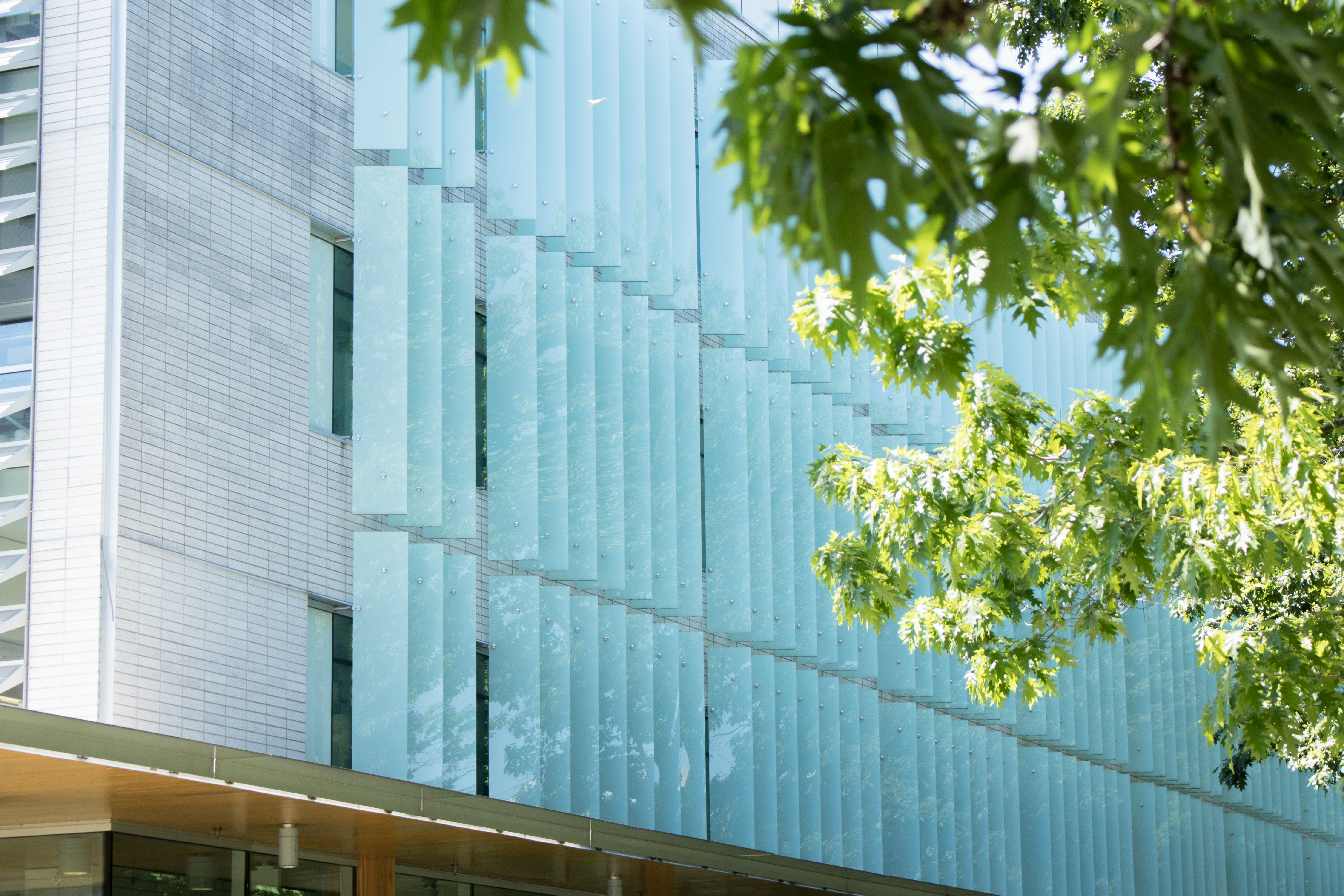
The University of British Columbia Vancouver campus Earth Sciences building includes angled glass "fins" on one facade, which allow birds to better see the building. Photo by Philip Bertogg.
In the retrofit category are films and decals, which can be applied to existing windows. According to ABC’s Parkins, decals are very popular and are easily obtainable, but also tend to be less effective. “Decals aren’t always correctly applied,” she says. “They need to go on the exterior of the windows and they need to be spaced correctly.” Parkins recommends full films and other products in which the correct spacing of the pattern is assured. An example of a full-film product is Solyx Bird Safety Window Films, which have a pattern of horizontal or vertical lines.
A widely-used retrofit product is Feather Friendly, which makes dots and dashes made out of a proprietary vinyl material in a variety of pre-spaced patterns. The company can also make custom dots (in the shape of a company logo, for example) and custom patterns. According to the manufacturer, because only the dots are applied to the glass, it has an advantage over full-film products since it does not void the warranty of IGUs (insulated glass units). The latest version of the product is now backed by a 15-year warranty, making it an option for new builds as well. Launched in 2006, Feather Friendly has been applied to 12 million square feet of facades, notably on a lakeside building at Chicago’s McCormick Place. After it was applied, logged bird deaths at the building fell by 95 percent. Feather Friendly also offers Bird Divert, a UV version.
For new builds, bird-friendly glass is available from major plate-glass manufacturers, including Vitro Architectural Glass, the maker of Solarban, and Guardian Glass. To mitigate reflections, “first surface” products, in which the pattern is applied on Surface #1, the exterior of the glass, are recommended (and even mandated in some jurisdictions).
Since glass manufacturers were already using ceramic frit to reduce solar gain, bird frit was an easy addition to their product lines and continues to be the most familiar product for new builds. Ceramic frit is usually applied on an inner surface, but is more commonly available on Surface 1 these days. Acid-etched and laser-etched glass, which are first-surface products, tend to offer less contrast than ceramic frit and are also more expensive. Laser etching is the latest technology to hit the market and doesn’t have the environmental concerns posed by the hydrofluoric acid used in acid etching. Some companies offer products with bird frit on Surface 1 and low-e coating on Surface 2, designed to enhance the contrast of the pattern against the low-e background. One of the most visible products to birds is Eastman’s Saflex FlySafe 3D, which relies on embedded sequins. It has a threat factor rating of 9, among the lowest ratings for any commercial product in the ABC database, and has been installed in some buildings in Europe.
One of the very first bird-friendly products to come on the market was a UV-patterned glass. Ornilux, from German company Arnold Glass, was released in 2006. It was inspired by spiders that incorporate UV-reflective threads into their webs to prevent birds from crashing into them and destroying their careful work. It has a non-directional design that reduces waste since it allows more parts to be cut from stock sheets. Guardian Glass is about to launch a new version of its Bird1st UV product with a non-directional pattern. According to information provided by the manufacturer, “This pattern was developed through interviews with many architects to make sure it meets their needs on building designs with strong aesthetic requirements.”
Going forward, glass facades with integrated solar arrays, or building-integrated photovoltaics (BIPV), also known as solar vision glass, will be available with bird frit. At least one company, NEXT Energy, has a product that should be released soon.
Birds can also be protected from glazing by a visible barrier in front, including screens, netting, sunshades or louvers. These different options are detailed in the 2022 California Green Buildings Standards (CALGreen). For example, the glass curtain wall of The New York Times building in Midtown Manhattan, designed by Renzo Piano Building Workshop with FXCollaborative, is covered by a sunscreen of thin ceramic rods that block up to 50 percent of the sun. Though not designed specifically to be bird-friendly, its sustainability strategy also happens to protect birds.
Case Studies
Now that architects have been thinking about bird-friendly design for about two decades, there are some good examples of how to add bird protection in an aesthetically pleasing way. ABC cites many projects in its 2015 guide to bird-friendly building design, which is currently being updated; the new version is slated to be released by year’s end.
Columbia University’s School of Nursing, designed by FXCollaborative with CO Architects, has a classic curtain wall facade. Much of the glass is embellished with translucent frit lines on Surface 1. In addition to reducing solar gain, the frit creates privacy for the classrooms, offices and other private areas. The client also liked how the frit reduced reflections of other buildings and made the building look less “harshly slick,” according to Piselli. A more recent project of FXCollaborative, designed in collaboration with Diller Scofidio + Renfro, are the Columbia Business School’s new buildings. The design team utilized a combination of white and black frit to accentuate the different volumes of the buildings.
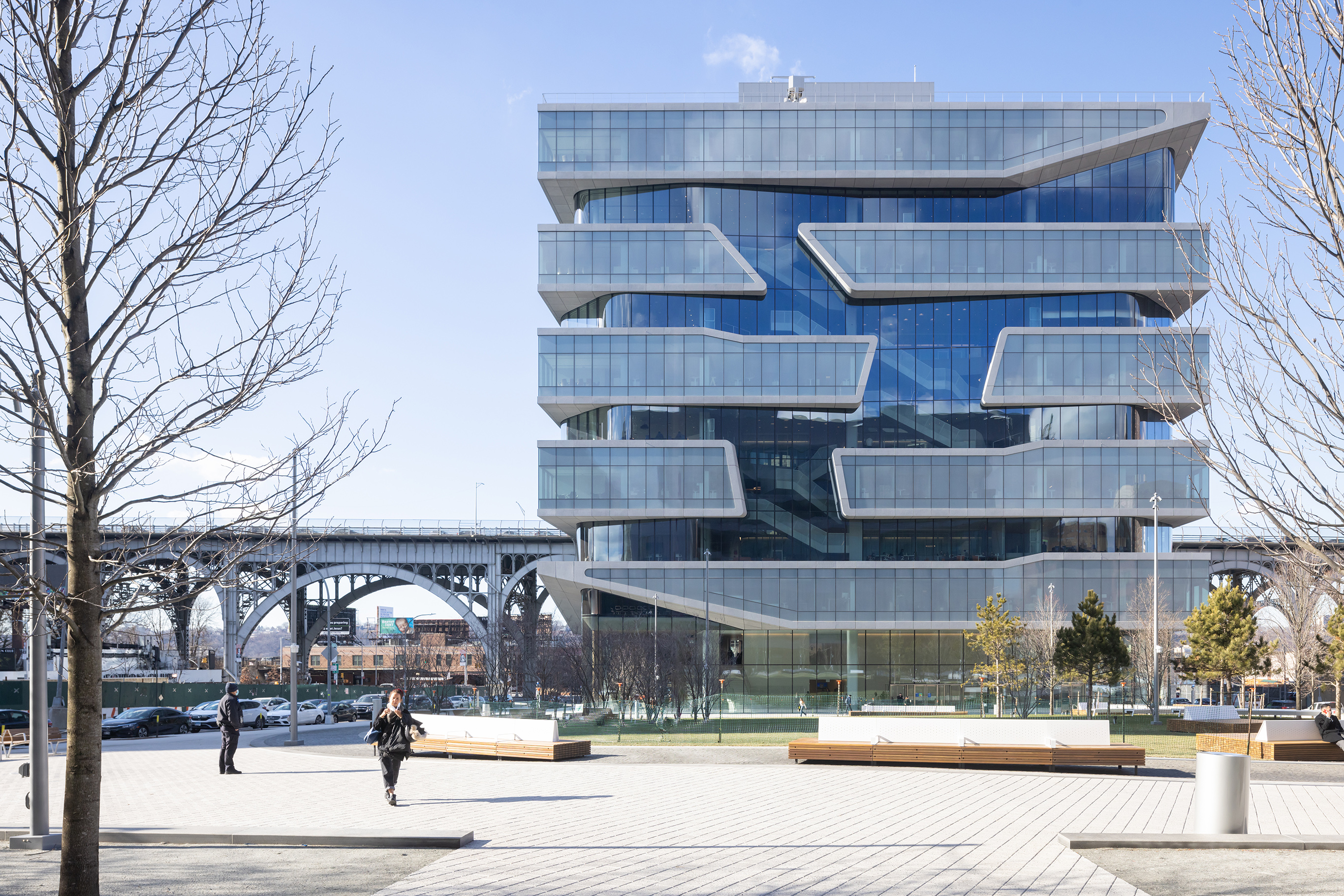
The facade of the Columbia Business School by FXCollaborative, in collaboration with Diller Scofidio + Renfro, has varying facade depths as well as a combination of white and black frit to accentuate the different volumes of the building for bird safety.
And since bird frit doesn’t have to be dots in a grid, some firms have taken advantage of this opportunity for creative expression. At the bookstore at the University of British Columbia’s Vancouver campus, designed by OMB, the glazing is patterned with a ceramic frit of words taken from the favorite books of its professors, students, administrators and visitors. At a university project that Shepley Bulfinch designed in collaboration with Frederick Fisher & Partners, the custom frit is based on a Turing pattern, a theoretical model of chemical reactions.
To ensure that bird safety is a priority, it’s important to get the client on board early in the process. For a four-floor medical facility, the original design by Shepley Bulfinch had bird frit on all the glass. But when key stakeholders who hadn’t been present in earlier discussions saw full-scale mockups of the bird frit glass, they asked for it to be removed on an upper floor where patients would spend a lot of time getting treatment. “They didn’t want people sitting for many hours looking through dots,” says senior architect Lynn Petermann. Because the design was already set, and it would have been difficult to modify the unitized curtain wall with UV-coated glass, the final design was a compromise. The glassed-in lobby still has bird frit, as do the glazed corners on the first floor. “I think as more cities adopt these ordinances, it will become standard practice, and people will accustom themselves to the little dots,” says Petermann.
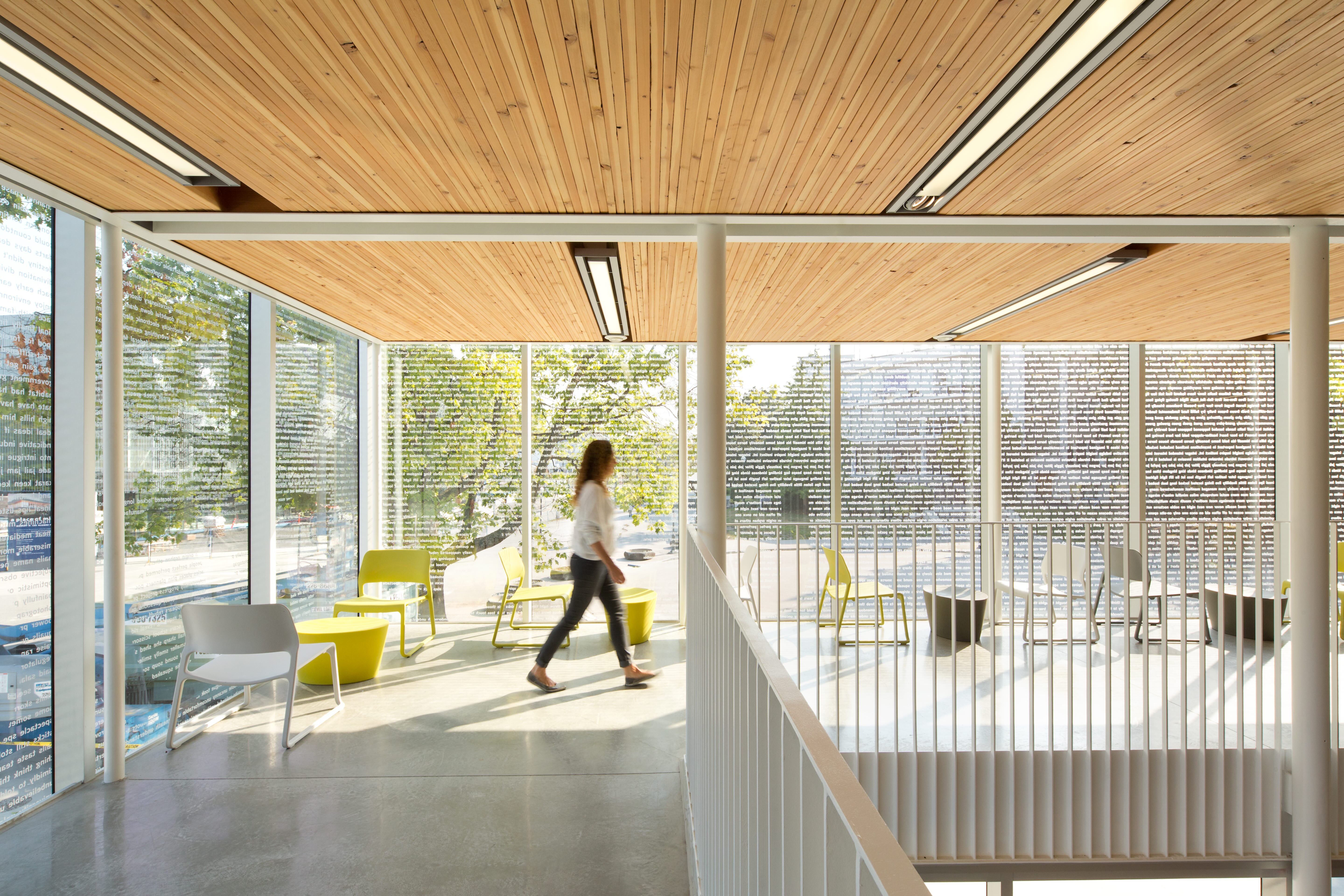
At the bookstore at the University of British Columbia’s Vancouver campus, designed by OMB, the glazing is patterned with a ceramic frit of words taken from the favorite books of its professors, students, administrators and visitors. Photo courtesy office of McFarlane Biggar Architects + Designers; Ema Peter
Those little dots can add up to make a big difference. “We talk a lot about endangered species and the importance of protecting threatened species,” says Juan Rovalo, director of ecology at Perkins & Will. “But another crisis that we don’t talk about is the staggering loss in species that are not yet threatened. In the last decades, wildlife species across the world, including common species, have declined by an average of 73 percent. It’s death by a million cuts. And every little bird that strikes a window is one fewer. Protecting them is not rocket science. We just need to be informed, love the places that we live in and take a little bit of care for all the creatures that live with us.”