
Blog Post
USGBC California Hosts an Innovative Carbon Forward Summit in L.A.
As California prepares to host the 2028 Olympic and Paralympic Games, it gives the region a rare chance to show how major investment in buildings and infrastructure, in downtown L.A. and beyond, can drive lasting change—among the key themes of the USGBC CA event. Photo by Erika Heet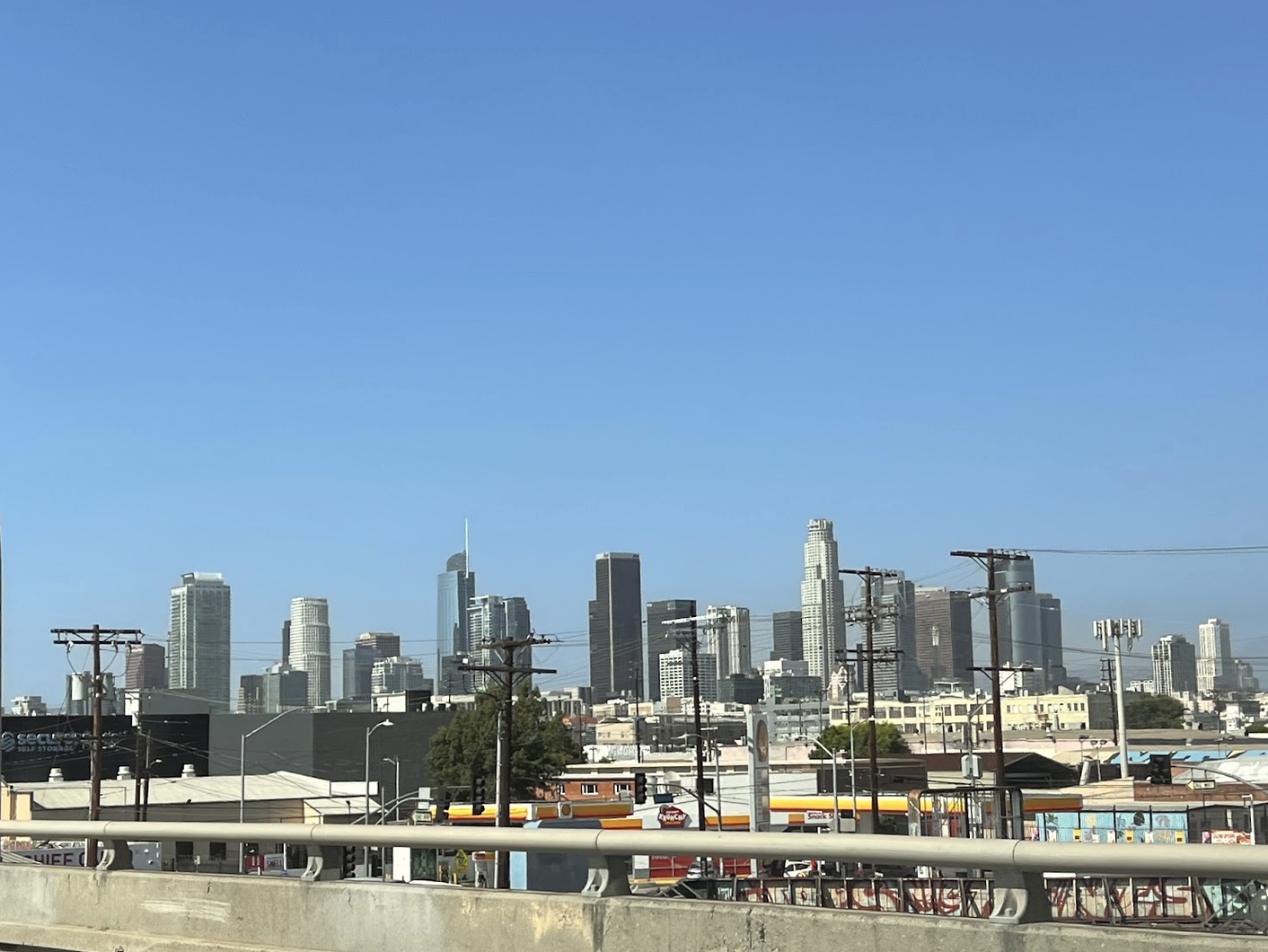
Ben Stapleton, CEO of USGBC California, addressed the audience with opening remarks before moderating the panel discussion “Concrete Action: Turning Market Innovation into Public Procurement.” Photo by Ling Luo/USGBC California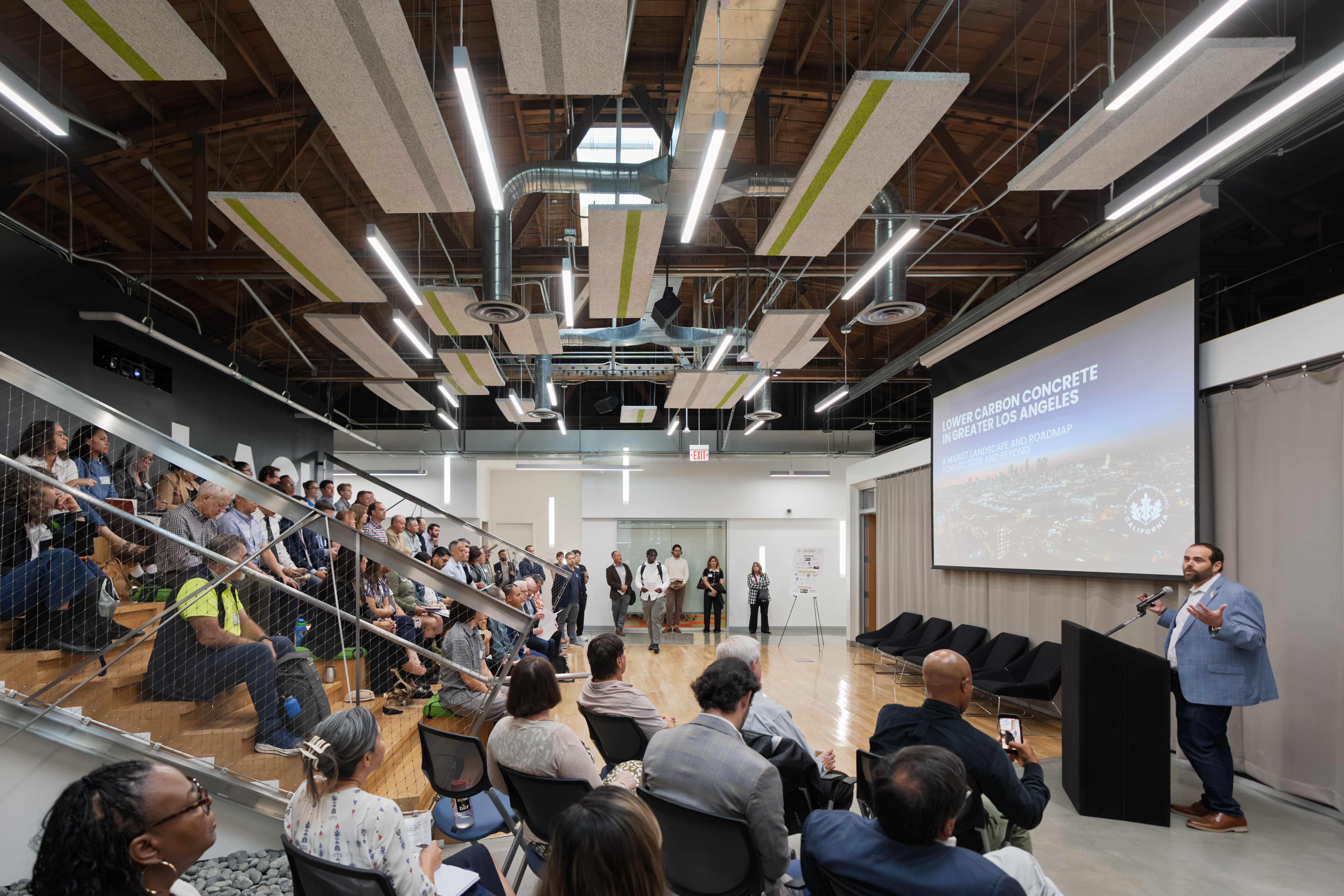
Concrete with lower embodied carbon was the hot topic, and how the upcoming Olympics will trigger a greater need for this commodity. The dialogue turned to the greater city to lead as an example for the rest of the world, to meet challenges of increased construction for events as big as the Olympics with sustainable materials. The City of Los Angeles was called to build better and the world will follow.
USGBC Associate Director Steph Hallinan address attendees at “LEED v5 Carbon Reduction Strategies: Major Venues, Materials & Measurable Impact.” Photo by Ling Luo/USGBC California BuildingGreen relies on our premium members, not on advertisers. Help make our work possible.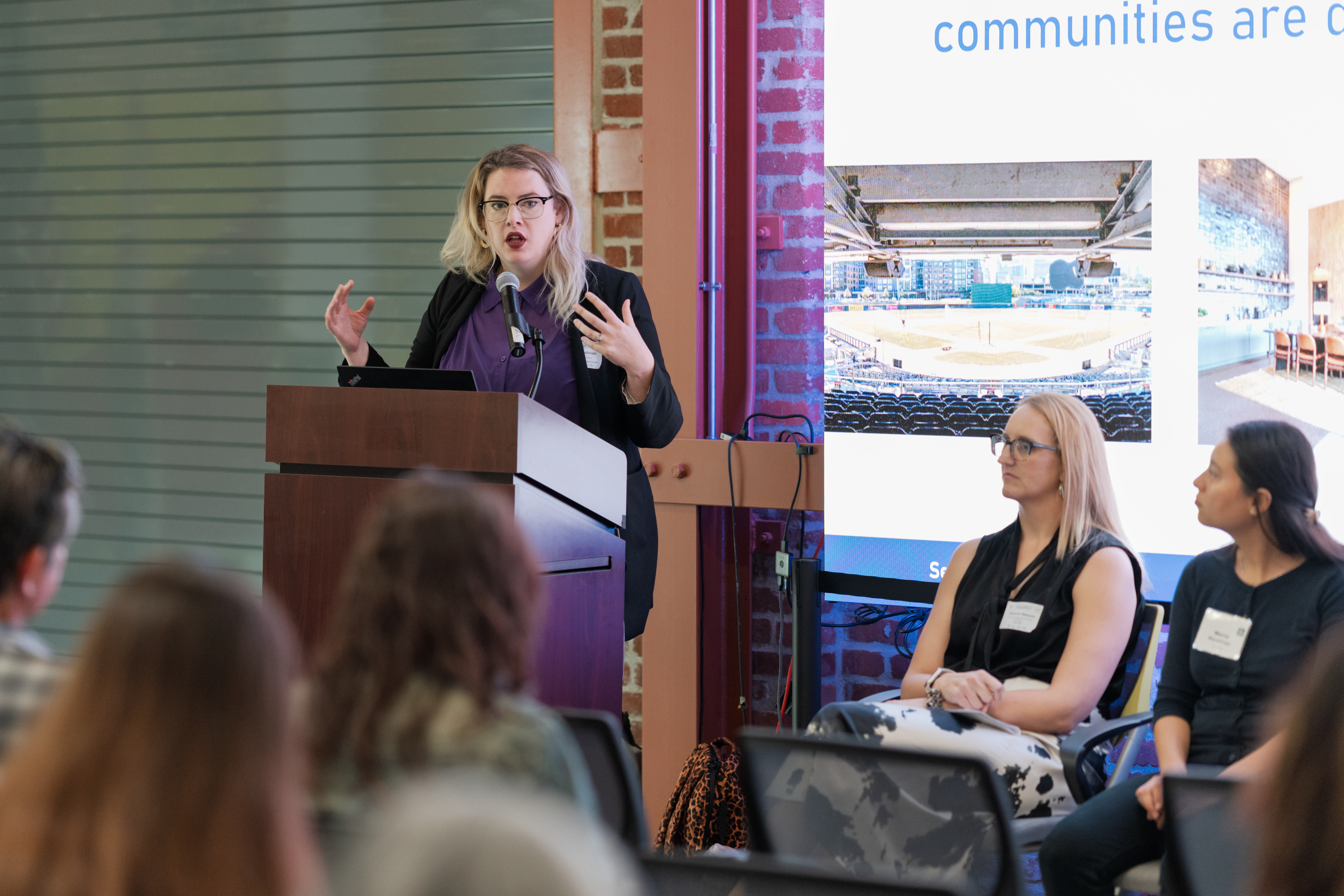
SUPPORT INDEPENDENT SUSTAINABILITY REPORTING
One such discussion was “LEED v5 Carbon Reduction Strategies: Major Venues, Materials & Measurable Impact.” This panel was led by Steph Hallinan, U.S. Green Building Council Associate Director. USGBC Senior Director Wes Sullens started the discussion with an overview of LEED v5, explaining the shift in focus to better serve the advancement of low-carbon materials. All projects in LEED v5 are required to express the cradle to grave lifecycle and the embodied carbon of materials. Decarbonization spanned across operational, embodied and transportation carbon. There are greater opportunities to earn points for lessening the carbon in projects under LEED v5.
Turner Construction Sustainability Engineer Mersy Maradiaga later went on to share how lower embodied carbon concrete was used in an airport remodel. Their product, called OurCarbon concrete, uses combusted biosolid material as concrete. This allows the material to have less of a carbon footprint than traditional concrete because it uses a different main material. The use of this concrete in the airport was a success, but it also behaved differently and was slightly more porous than normal concrete. Maradiaga then went on to give different examples of lower carbon concrete, such as Ground Glass Pozzolan concrete.
Among the exhibitors on the show floor was Hemp Cement Co, which supplies the world’s first structural industrial hemp building material for HempCement blocks (pre-tested ASTM C90 standards and fire-resistant).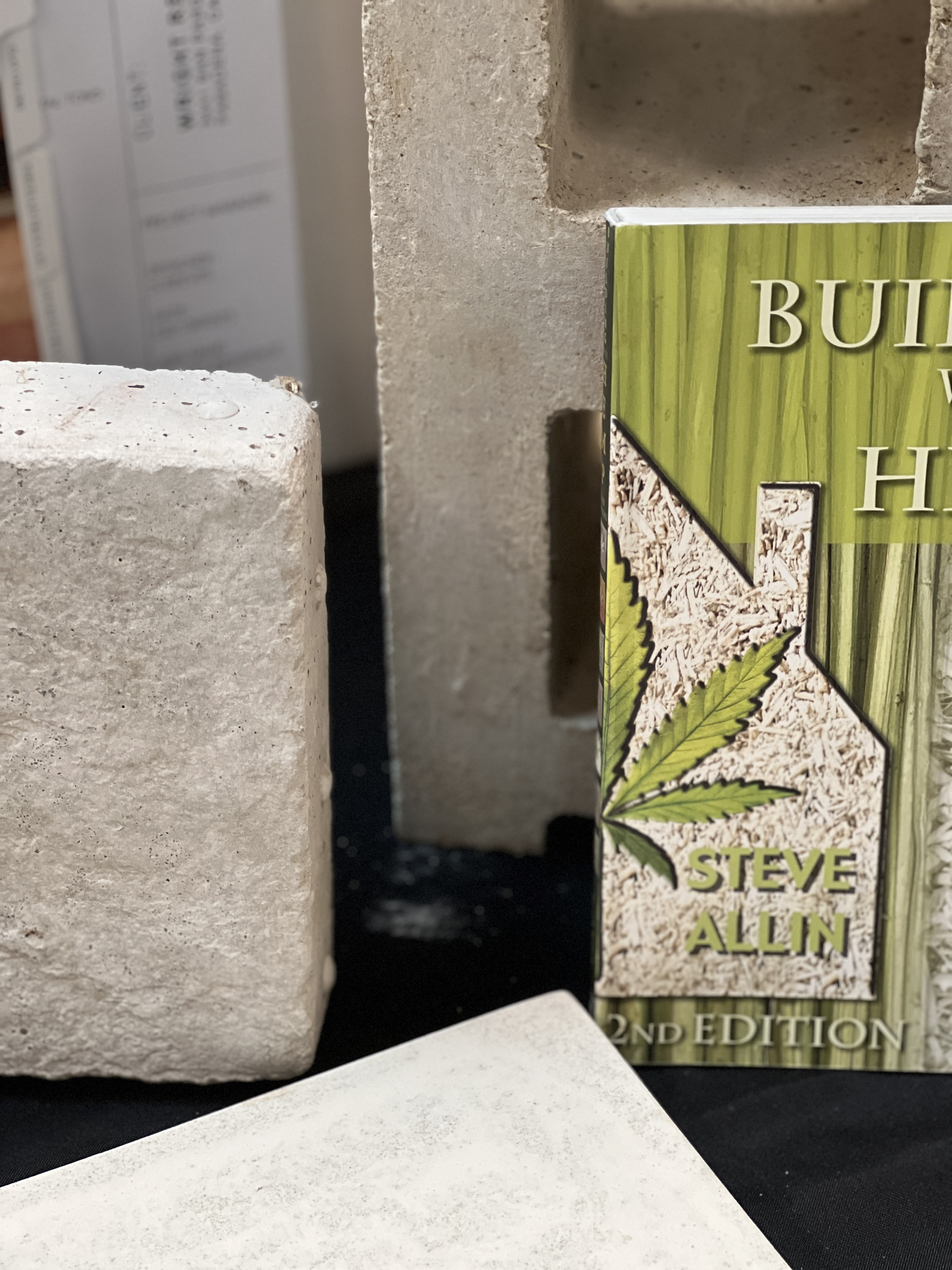
The session “Sustainable Intelligence: Rethinking Water, Carbon & Resilience in Data Center Development,” which included Seth Strongin of HDR, Olivier Sommerhalder of Gensler and Patrick Coughlin of Turner Construction, merely scratched the surface of planning for truly meaningful, necessary carbon mitigation approaches that should be required in the construction of data centers. Strongin was refreshingly frank about the need for data center waste heat to be acknowledged, reduced and even, somehow, channeled to other heating needs. This nod to wishful thinking was among the very few realistic recognitions of data centers’ harsh environmental destruction.
Beyond the robust panel discussions, the Carbon Forward Summit featured a curated exposition of sustainable materials like Fortera low CO2 cement, HempCement and Mad River Mass Timber. Habitat education conservation was even mixed in with HempCement planters and native plants.
Kiley Feickert of Forma Systems participates in the first RFI session, detailing how Forma builds optimization software for the construction industry, starting with precast concrete, and expanding across structural systems and workflows to accelerate and derisk bidding through efficient and accurate design generation.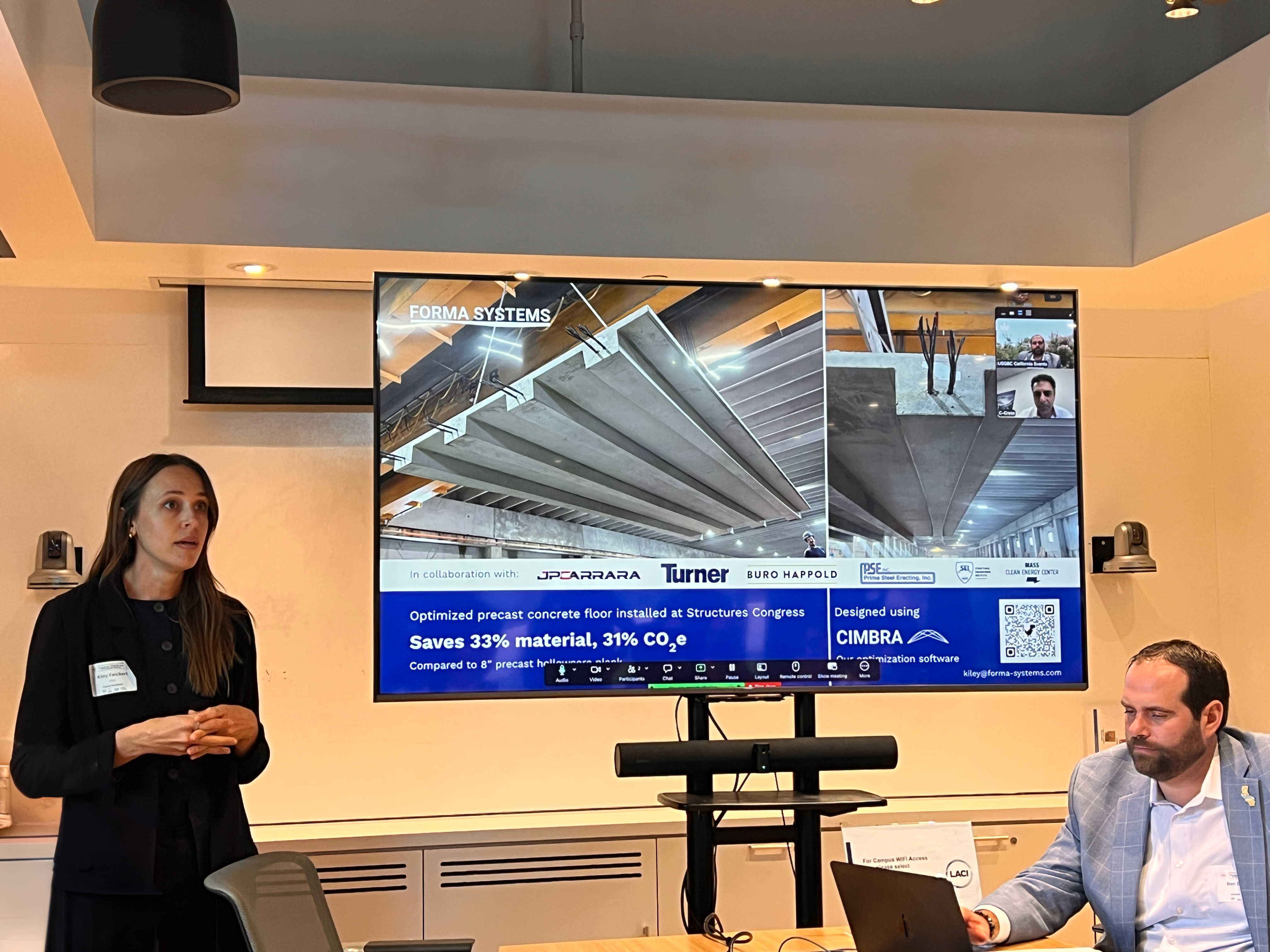
The BuildingGreen editorial team, editor-in-chief Erika Heet and assistant editor Elene Drosos, on the show floor near the Mad River Mass Timber display.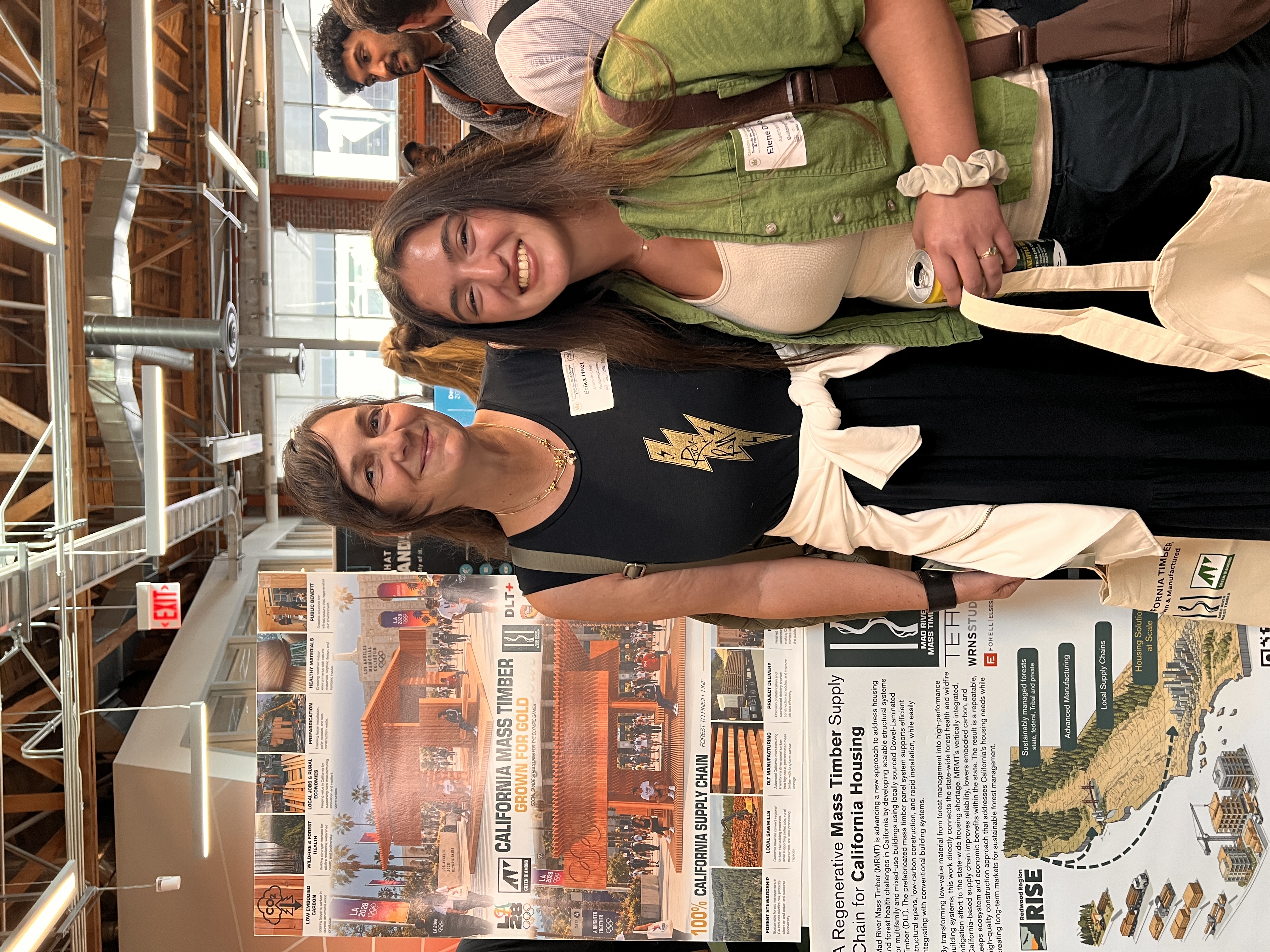
Published September 29, 2026 Permalink Citation
editors, t. (2026, September 29). USGBC California Hosts an Innovative Carbon Forward Summit in L.A.. Retrieved from https://www.buildinggreen.com/blog/usgbc-california-hosts-innovative-carbon-forward-summit-la



Add new comment
To post a comment, you need to register for a BuildingGreen Basic membership (free) or login to your existing profile.